
























Detailed program: Download program booklet (PDF)
Timetable
| Monday August 31 | Tuesday September 1 | Wednesday September 2 | Thursday September 3 | Friday September 4 | |
| 08:30 – 09:00 | Opening Session | ||||
| 09:00 – 10:30 | Keynotes | Paper Sessions | Paper Sessions | Excursion to Saxon Switzerland (additional charges apply) | |
| 10:30 – 11:00 | Coffee break | ||||
| 11:00 – 12:30 | Panel Sessions | Paper Sessions | Paper Sessions | ||
| 12:30 – 14:00 | Lunch break | Closing ceremony / Lunch | |||
| 14:00 – 15:30 | Tutorials | Panel Sessions | Poster Sessions | Excursion to Meißen | |
| 15:30 – 16:00 | Coffee break | ||||
| 16:00 – 17:30 | Tutorials | Paper Sessions | Paper Sessions | ||
| 18:30 – 22:00 | Welcome Reception | Women in Power Quality | Gala Dinner | ||
Tutorials
Tutorial sessions offer an excellent opportunity for training and development in power quality topics ranging from fundamental concepts to state-of-the-art developments.
Tutorials are scheduled on August 31 in the time from 14:00 to 17:30 including a coffee break of 30 min.
Tutorial Track 1
CIGRE TB976 – Methods for Identification of Frequency Response Characteristic of Voltage Measurement Systems (1,5h)
Presenter: Dr.-Ing. Erik Sperling
This tutorial summarises the CIGRE technical brochure (TB 976) regarding the frequency response of voltage measurement systems in modern networks. It explores the design and accuracy of conventional (inductive and capacitive) and low-power instrument transformers (voltage dividers and optical sensors). Key performance characteristics, like ratio error, phase displacement, and resonance frequencies, are examined alongside mathematical modelling techniques such as vector fitting and digital twins. Additionally, grid requirements and performance characteristics are discussed and considered. Modern test technologies are provided for identifying the frequency-dependent transmission behaviour. Finally, the tutorial provides a classification mapping to help professionals identify measurement requirements, grid characteristics and future power system applications to select the best instrument transformer technology.
The impact of Geomagnetically Induced Currents on Power Quality (1,5h)
Presenters: Dr.-Ing. Roger Alves de Oliveira, Dr.-Ing. Rafael de Souza Salles and Prof. Math Bollen
This tutorial explores geomagnetically induced currents (GICs) and their impact on power quality. It covers measurement results, monitoring methods based on measurements, geographic validation studies from research conducted by the speakers. The main goal of the tutorial is to explain what causes geomagnetic disturbances, how they affect power quality, and mainly on how to detect them from PQ measurements. The tutorial provides a practical workflow for understand the PQ variations and events during geomagnetic disturbances.
Tutorial Track 2
Decomposition into Currents’ Physical Components (CPC): the Fundamental of Power Theory and Compensation (1,5h)
Presenter: Prof. Leszek S. Czarnecki, Louisiana State University
This tutorial introduces the Currents’ Physical Components (CPC) decomposition as a framework for understanding power properties in electrical circuits with nonsinusoidal voltages and currents. It examines the physical phenomena responsible for energy transfer degradation in complex systems, including single-phase and three-phase circuits with nonlinear or unbalanced loads. The session focuses on how the CPC method facilitates the development of reactance and hybrid switching compensators to improve system efficiency. By addressing long-standing theories and utilizing practical numerical examples, the tutorial provides a comprehensive approach to investigating and optimizing power properties in modern electrical grids.
Electric Vehicle Charging Systems: Power Quality, Metering Accuracy, and On‑Site Verification (1,5h)
Presenter: Dr. Helko Van Den Brom
This tutorial addresses the technical challenges of ensuring reliable energy metering and power quality monitoring in modern electric vehicle charging systems. It explores how realistic grid conditions, such as network disturbances and network impedance, can affect charging efficiency and meter accuracy. Participants will learn about advanced laboratory test benches for AC and DC charging systems up to 44 and 350 kW, respectively, the use of load emulators for reproducible testing, and new on-site verification procedures designed to meet international legal standards. The session provides practical guidance for professionals to navigate emerging metrological frameworks and improve infrastructure performance.
Tutorial Track 3
Understanding the Stochasticity of Harmonic Impedances and Injections for Hosting Capacity Calculation (3h)
Presenters: Dr.-Ing. Amauri Martins Britto, Dr.-Ing. Jinwen Xiang and Ehsan Kazemi-Robati
This tutorial explores the technical challenges of large-scale industrial electrification driven by the European Green Deal. As industries integrate high-power electrical drives and power-electronic converters, rising harmonic distortion threatens grid stability and industrial productivity and competitiveness. The tutorial introduces methodologies from the HARMONIC project to assess harmonic hosting capacity. Key topics include uncertainty quantification for cable impedances, harmonic phasor distributions of power converters, and optimisation-based stochastic harmonic hosting capacity determination. This tutorial will guide participants from component-level uncertainty to system-wide hosting capacity assessment, equipping them with the analytical tools needed to model various aspects of harmonics in the power system.
Keynote Speakers

S. Mark Halpin (Fellow, IEEE) is a Professor in the Department of Electrical and Computer Engineering at Auburn University. His teaching interests include power systems, control systems, and network analysis. His research interests are in the areas of power system dynamic performance and power quality. He is active in the IEEE Power Engineering Society where he was the Chair of IEEE 519, in CIGRE where he serves as Convener of the Working Group charged with revising the IEC Technical Reports dealing with emission limits for harmonics, voltage fluctuations, and unbalance, and in IEC where he serves as Chair of TC77/SC77A which is responsible for standardization in all aspects of low-frequency conducted disturbances (power quality) in power systems.
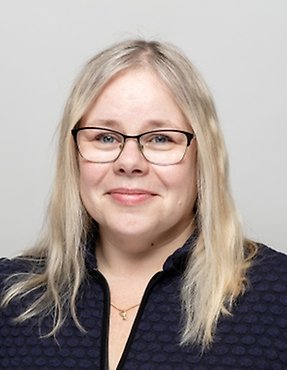
Sarah Rönnberg (Senior Member, IEEE) is Professor and Head of the Electric Power Engineering group at Luleå University of Technology, a position she has held since 2025. She received her PhD in Electric Power Engineering from the same university in 2013. She has been involved in a range of research pro-jects in electric power systems and has published in journals and conferences within the field. Her work includes both academic research and collaboration with industry. Her research focuses on distribution grids and power quality, with particular attention to harmonics and supraharmonics, especially in sys-tems with a high share of power electronic equipment. In addition to her research activities, she is ac-tively involved in teaching and supervision of graduate students.
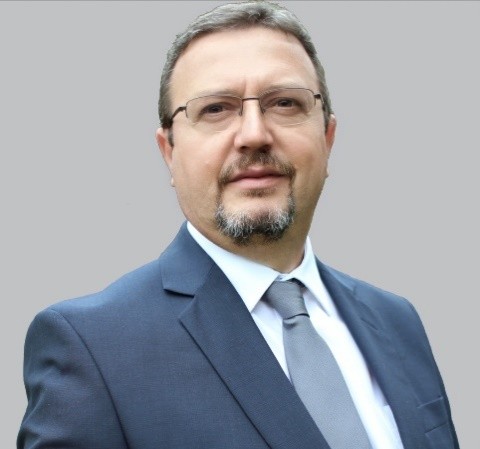
Zia Emin has worked for 14 years with the UK transmission owner/operator National Grid and 12 years in consultancy as Chief Power System Engineer and Technical Director. Since 2023 he has been working at Electric Power Research Institute as Technical Executive. He has extensive knowledge in all aspects of power system modelling including steady-state, frequency and time domain modelling and substantial experience in harmonic performance specifications of power electronic interfaced devices (HVDC converter stations, FACTS, renewable generation connections etc). He worked actively in many international projects dealing with power quality issues and more recently he has been reviewing harmonics management policies for major transmission system operators. He has been active in many CIGRE (International Council on Large Electric Systems) working groups. From 2016 to 2022 he was the chairman of CIGRE SC C4 and its Strategic Advisory Group. He is a Fellow of the Institute of Engineering and Technology (IET – UK), a Senior Member of IEEE, a Distinguished and Honorary Member of CIGRE, a registered European Engineer, and a Chartered Engineer in the United Kingdom.
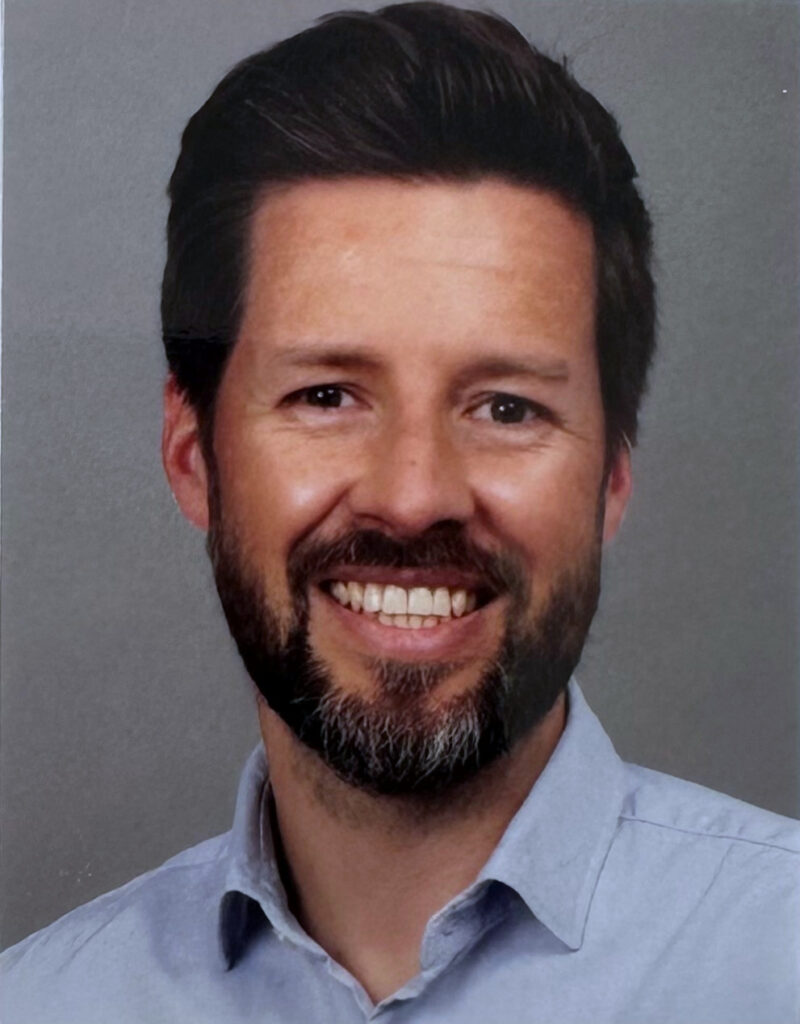
Marco Lindner is currently with the German transmission system operator TransnetBW as a lead engineer for pow-er system stability with a particular focus on sub-/supersynchronous and harmonic stability. His re-search interests include power electronics coupled systems (e.g., HVdc, storage, FACTS) and their inter-actions and stability issues in a wide frequency range with a system perspective. For this work, he draws on four years of experience in the areas of specification, engineering, offline and real-time simulation studies, verification measurements and commissioning of power electronics-based systems. He is co-convenor of the German 4TSO working group on power quality and is actively contributing to the working group for control interactions and stability. He is active in CIGRE where he is a key member of the joint IEEE/CIGRE task force on “Reassessment of Power System Stability Definitions and Classifications for Converter-Dominated Grids”, whose goal is the revision of IEEE TR77. In addition, he participates in several CIGRE working groups dealing with Power-Quality (limits for emission, limit allocation, verification studies) and EMT interaction studies.
Panel Sessions
Panel 1: Field Experiences in Managing Compliance with Emission Limits
Chair: Herwig Renner, Graz University, Austria
Herwig Renner received his PhD in 1995 at Graz University, where he currently holds a position as associate professor at the Institute of Electrical Power Systems. His research is in the field of power system control and stability as well as in power quality, with special focus on industrial disturbers. He is a member of the CIRED TC and was member of several CIGRE working groups dealing with power quality.
Abstract:
Emission compliance ensures that electrical equipment and systems do not inject excessive disturb-ances, such as harmonics, voltage fluctuations, and flicker into the power grid. Relevant standards in-clude amongst others the IEC 61000 series and IEEE 519 and IEEE 1453. For large customer installa-tions connected to HV and EHV systems, individual and comprehensive system studies to manage compliance are required. This includes the allocation of emission limits in the planning phase, the de-sign of measures to handle the emission and measurements to verify the compliance during the commissioning phase. For customer installations connected to LV and MV networks, such detailed compliance studies are usually not feasible due to the number of connectees as well as the missing knowledge of the required data both on the grid side (e.g. network harmonic impedance) and the customer side (technologies to be used). The challenges and experiences of compliance assessment, both at distribution and transmission level will be presented and discussed in this panel session.
Panelists:
- Resonance damping in HV networks
Christian Dresel, Condensator Dominit, Germany - Interharmonics related to wind turbine converters
Irina Subotic, ABB, Switzerland - Experiences with the connection of large renewable plants in South Africa
Brandon Peterson, NTCSA (former Eskom), South Africa - Challenges in harmonic compliance studies
Davor Vujatovic, VandA Engineering Limited, United Kingdom - Harmonic compliance when repowering renewable installations
Seth Treasure, National Grid Distribution, United Kingdom
Panel 2: Opportunities and Challenges in Large-Scale Power Quality Data Analysis
Chair: Gary Chang, National Chung Cheng University, Taiwan
Gary W. Chang obtained his PhD from the University of Texas at Austin in 1994. He served as Chair of the IEEE PES Power Quality Subcommittee (2016-2017) and the IEEE PES Transmission and Distribution Committee (2019-2020). Presently, Prof. Chang serves as a Senior Editor of IEEE Transactions on Power Delivery and as an Associate Editor of IEEE Power Engineering Letters.
Abstract:
The increasing deployment of power quality (PQ) monitoring systems is generating unprece-dented volumes of measurement data, creating opportunities and challenges for the power sec-tor. This panel brings together stakeholders from academia, instrument manufacturers, and DSO/TSO organizations to discuss large-scale PQ data analysis, including data management, in-teroperability, analytics, and decision-making. Through short presentations and discussion, the session will explore benefits, limitations, and directions for extracting value from expanding PQ data resources.
Panelists:
- Statistical Assessment of Power Quality Compliance in Public Electricity Network (Australia)
Robert Barr, Electric Power Consulting Pty Ltd, Australia - Power Quality Monitoring at State Grid China – Needs and Findings
Tongxun Wang, China Electric Power Research Institute, China - Large Scale Harmonic Monitoring and Root Cause Analysis in Gigawatt Offshore Wind Farms
Ulrich Lettau, iba AG, Germany - Application Examples of Power Quality Data Analytics Beyond the Mainstream
Walmir Freitas, University of Campinas, Brazil - What have we learnt from the PQ measurements in the transmission grid and what are our future ambitions?
Jeroen van Waes, TenneT TSO B.V./Eindhoven University of Technology, Netherlands
Panel 3: Power Quality Challenges in AC and DC Networks with a High Share of Power Electronics
Chair: Xavier Yang, Électricité de France (EDF), France
Xavier Yang works for more than 30 years at Électricité de France (EDF) within the Research & Development Institute. His research interests include electric power grid modeling, power electronics applications, on-site power quality mitigation, international standardization, and the development of power system modelling and simulation tools. Presently he serves as an expert and working group convener in several international technical committees, including IEC SC77A, IEC SC8B, and CIGRE.
Abstract:
Modern power systems with a high penetration of power electronic converters face significant power quality challenges, including harmonic resonances involving passive and active network components, shifts in disturbance source characteristics (current- versus voltage-source behav-ior), the need for advanced modeling and parameter identification techniques, and harmonic convergence issues in numerical simulations. More on-site investigations and case studies are needed to support the development of international standards that can keep pace with the evolving electric power grid.
Panelists:
- Challenges of simulation-based resonance stability studies
Robert Pardatscher, DIgSILENT GmbH, Germany - The Future Architecture of the Network Project
Neville Watson, University of Canterbury, New Zealand - Emission limits in power electronics dominated AC networks
Sebastien Gouraud, EDF, France - Metrology for grid-forming converters (European project GridForm)
Stefano Lodetti, National Physicals Laboratory (NPL), United Kingdom - Converter Dominated Grids: Between Control Algorithms and Grid Physics
Stefan Laudahn, Reinhausen GmbH, Germany
Panel 4: Advanced Metrology for New Power Quality Applications
Chair: Guglielmo Frigo, Federal Institute of Metrology (METAS), Switzerland
Guglielmo Frigo is Senior Scientist at the Federal Institute of Metrology in Bern, Switzerland. Since October 2025, he is the convenor of IEC SC77A WG9 „Power Quality Measurement Methods.“ In this role, Dr. Frigo is promoting the establishment of new reference methods for DC power quality and network impedance measurements, and the definition of a rigorous metrological framework for harmonic and supraharmonic measurements which suits the needs of both EMC and power system analysis.
Abstract:
The ongoing transformation of electric power systems driven by renewable generation, modern power electronic equipment, energy storage, electric mobility, and emerging DC infrastructures is profoundly reshaping the concept of power quality and the associated measurement challenges. In this rapidly evolving scenario, metrology plays a central role in ensuring reliable assessment meth-ods, meaningful EMC coordination, and trustworthy monitoring techniques for future grids. This panel at IEEE ICHQP 2026 brings together experts from academia and industry to discuss some of the most pressing and timely issues in modern power-quality measurement.
Panelists:
- Long-term experience with a monitoring system for switching transients in the medium-voltage level
Roberto Schulze, OMICRON electronics GmbH, Germany - The need for an improved flickermeter considering LED lamps
Leoš Kukačka, Technical University of Liberec, Czech Republic - Remaining gaps towards a rigorous framework for DC Power Quality measurement
Helko van den Brom, National Metrology Institute VSL, Netherlands - The need for standardized Impedance measurement in the frequency range up to 150 kHz
Alexander Gallarreta, University of the Basque Country, Spain - Opportunities and challenges of supraharmonic measurements for an instrument manufacturer
Stephane Do, Powerside, USA
Power Quality Art Contest
Research in the field of Power Quality is not only very interesting, it can also have a very beautiful appearance. To reveal the beauty of Power Quality, for the first time ICHQP 2026 will feature a gallery “The Art of Power Quality”. The most beautiful and expressive images related to Power Quality research will be presented during the conference.
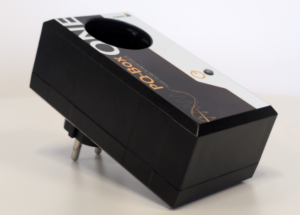
The 10 best image submissions will be pre-selected by a jury and displayed in a dedicated area during the conference. Attendees can vote for their favourite image. The winner will be announced during the gala dinner and gets as price a PQ-Box ONE from a-eberle:
How to submit an image:
- The content of the image must be related to a real-world Power Quality phenomenon (factual content only, no AI generated images). A short and reasonable description on the object of the image needs to be provided (not more than 50 words).
- Send your image and the description via email to pq-art@ichqp2026.org by
1st of August 2026.
New submission deadline: 9 August 2026
Additional requirements:
- If the file size is larger than 10 MB, please contact us before sending it as attachment via the same email.
- A submitted image will only be included in the contest, if the submitter has registered for the conference. The submission of an image before registration is possible. A maximum of three submissions per participant is allowed.
- Images can be submitted in bitmap (.png, .jpg) or vector graphics (.svg, .emf) format. For bitmap images, a minimum of 500 dpi is required.
- Submitted images should have a size that allows them to be printed in DIN A3 (29.7 x 42 cm).
- Images can be in colour or grayscale.